
Briefing a designer well is one of the most valuable things you can do for your project. The more clearly you can communicate what you need, the better the outcome – and the smoother the process. Yet it’s something many clients find surprisingly difficult, often through no fault of their own.
Here’s what to think about before that first conversation.
1. Know what you’re trying to achieve
Before you think about colours, logos or layouts, get clear on the purpose of the project. What problem are you trying to solve? Are you looking to attract a new type of customer, reposition your business, or simply update something that’s looking tired? A good designer will ask these questions anyway, but coming in with some clarity saves time and leads to sharper results.
2. Understand your audience
Who are you trying to reach? The more specifically you can describe your ideal customer – their age, profession, tastes, the other brands they trust – the more targeted and effective the design can be. Vague briefs produce vague results. Specific briefs produce work that connects.
3. Gather examples of what you like
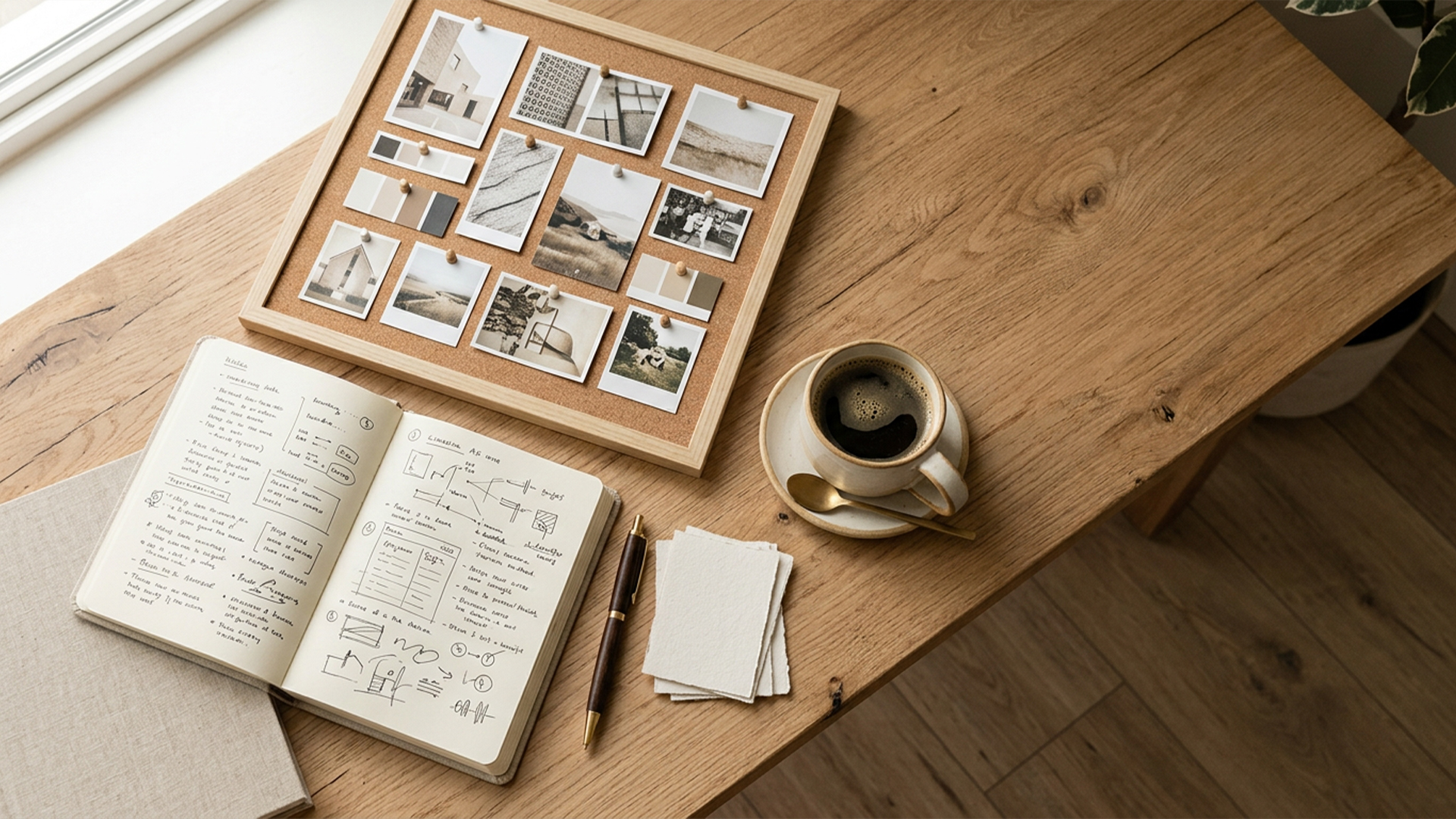
You don’t need to know exactly what you want – that’s what the designer is for. But collecting a handful of examples you’re drawn to is genuinely useful. It doesn’t matter if they’re from your industry or not. A mood board, a Pinterest folder, or even a few screenshots in a WhatsApp message all help a designer understand your taste and instincts far more quickly than words alone.
4. Be honest about what you don’t like
Just as useful as knowing what appeals to you is knowing what doesn’t. If there’s a style, colour, or approach you’d actively want to avoid, say so early. It saves everyone time and avoids the frustration of work going in the wrong direction.
5. Think about where the design will live
Will the design appear on print materials, a website, social media – or all three? Different formats have different requirements, and knowing this upfront means the designer can plan accordingly rather than retrofitting work for contexts they weren’t aware of.
6. Be clear about timings and budget
These two things shape everything. If you have a fixed deadline – a trade show, a product launch, an event – say so from the start. And while budgets can feel like an awkward conversation, being upfront about what you’re working with means a good designer can be honest about what’s achievable and structure the project accordingly. It’s a much better starting point than vague expectations on both sides.
A well-prepared brief doesn’t need to be a lengthy document. Sometimes it’s just a clear conversation. But coming in with some thought already done makes the whole process more enjoyable – and the results more likely to exceed your expectations.
Working with pH Design means you’ll be guided through the briefing process from the very start. If you’re not sure where to begin, that’s absolutely fine – getting clear together is part of the service. Get in touch to start the conversation.